

Decisions
Sandy Springs pledges nearly $11 million if Springway grant bid advances
Nearly $3 million is assigned to a fiscal 2028 budget allocation; $1.03 million in partner donations depends on winning the state grant.
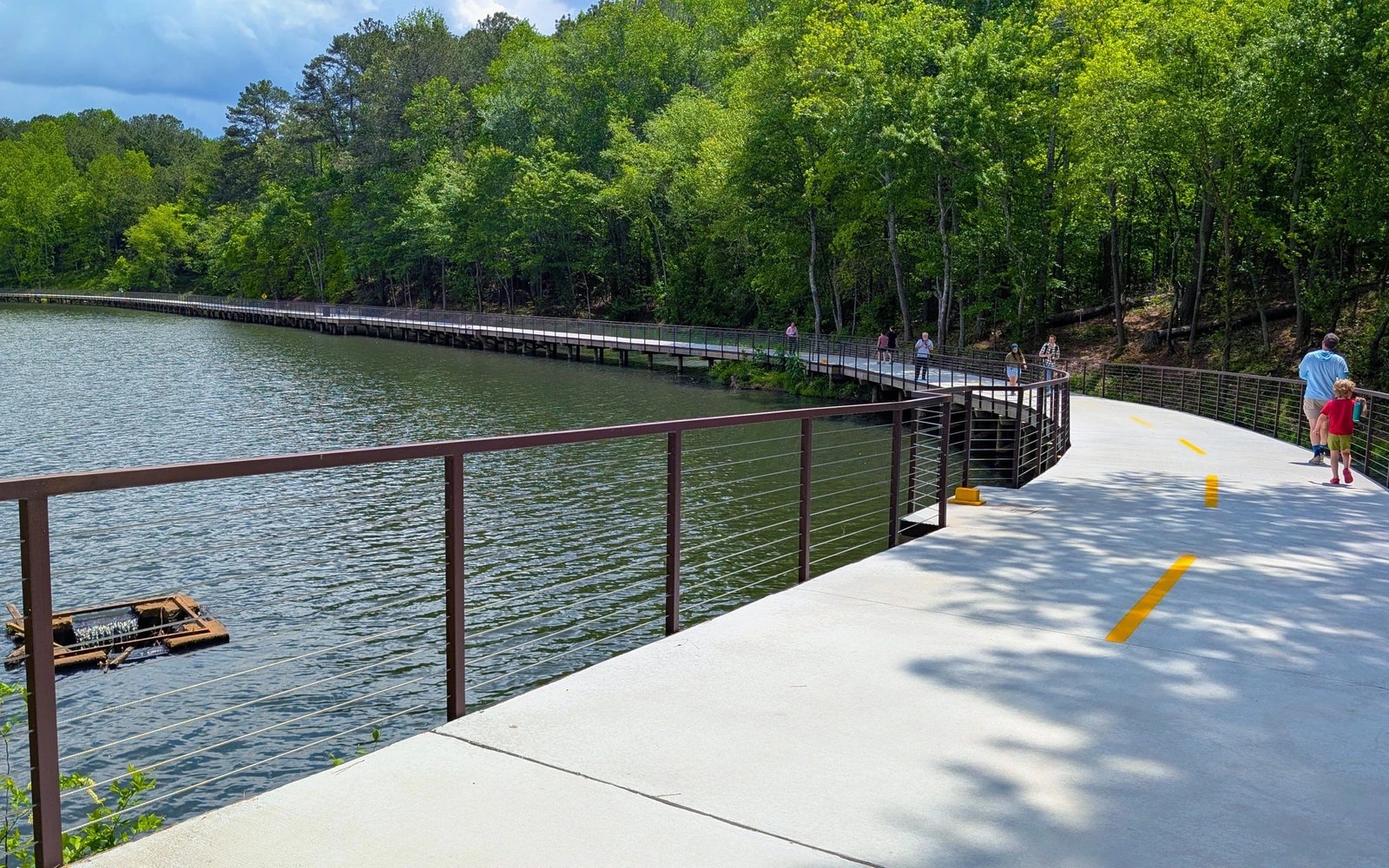
Sandy Springs City Council approved a $3 million grant bid Oct. 6 for Springway’s riverfront extension, with a nearly $11 million local funding commitment if the project advances to the second application round. The pledge does not wait for a final grant award.[1][2]
The proposed 1.6-mile Segment 2C would follow the Chattahoochee River from Morgan Falls Overlook Park to an existing sidepath at Grogans Ferry Road. Its January 2025 cost estimate is $13,992,520, including trail bridges, concrete boardwalk and retaining walls.[2]
Georgia’s Outdoor Stewardship Program requires at least 25% local funding, but caps grants in this category at $3 million. Even a full award would cover only about 21% of the trail’s estimated cost, leaving the city and its partners to fund the rest.[1][2]
The funding plan combines $6,995,775 in city project funds with $1 million from the PATH Foundation and $30,000 from the Sandy Springs Conservancy. Both partner contributions depend on receiving the grant—a later milestone than the one that triggers the city’s local funding commitment.[1][2]
Another $2,966,745 would still need to be allocated. The adopted resolution places that amount in the fiscal 2028 budget, through capital-budget or impact-fee allocations that council must decide. It commits to the funding plan without making that remaining allocation now.[1]
The resolution’s operative funding clause lists $10,992,250, while the staff funding breakdown totals $10,992,520—a $270 difference the documents do not explain.[1][2]
The pre-application deadline is Oct. 16. According to the city’s timetable, applicants will be notified in spring 2027; those invited forward must submit the second-level application by May 28, 2027.[2]
Sources
2 official sources cited in this report. The bracketed numbers in the text link here.
Reporting history
Newest first. Articles reflect what was known at publication.