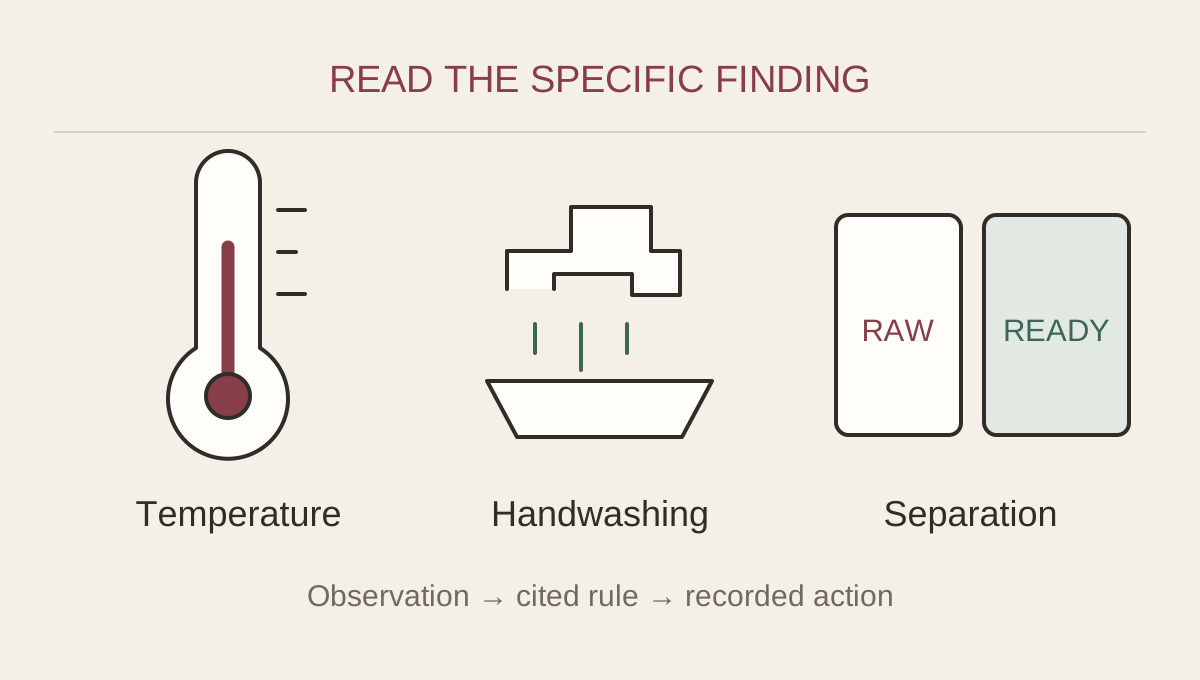
Food temperature findings
A temperature finding can concern cooking, holding, cooling or reheating. First identify which process the inspector described. A temperature that belongs in one process should not be judged using a limit written for another.
For hot and cold holding, Georgia’s general rule keeps foods requiring time/temperature control for safety at 41°F or below, or 135°F or above. The rule includes exceptions for preparation, cooking, cooling, permitted use of time as a public-health control and certain roasts. Those holding limits are not a universal cooking-temperature chart.
Source: Georgia food-service rules, 511-6-1-.04(6)(f).
Cooling has its own clock. The general rule for cooked food requiring temperature control is cooling from 135°F to 70°F within two hours, then to 41°F or below within six hours total. Read the inspector’s elapsed-time information along with the measured temperature. Different starting conditions have separate provisions.
Source: Georgia food-service rules, 511-6-1-.04(6)(d).
In the written finding, look for the food identified, its measured temperature, the relevant process and the action recorded. Avoid turning a finding about one identified food into a statement about every item in the kitchen.
Handwashing findings
Handwashing findings may describe an employee’s practice or the availability of a usable sink. Georgia requires food employees to clean their hands before food preparation and at specified transitions, including switching from raw food to ready-to-eat food and before putting on gloves for a food task. The general cleaning procedure takes at least twenty seconds.
Source: Georgia food-service rules, 511-6-1-.03(5)(b)–(d).
A handwashing sink must remain accessible and be used for handwashing. The facility rules also require soap and a suitable way to dry hands. A blocked sink, missing soap and an observed missed handwash describe different conditions. Read the exact note before deciding which one the inspector found.
Source: Georgia food-service rules, 511-6-1-.06(2)(o) and .07(3)(a)–(b).
A report may record that supplies were replaced during the visit. Keep that recorded action with the original finding; it does not establish what happened before or after the inspection.
Cross-contamination
Georgia’s food-protection rules address separation of raw animal foods from ready-to-eat foods during storage, preparation, holding and display. They also address separation between different raw animal foods and cleaning and sanitizing equipment and utensils between relevant uses.
Source: Georgia food-service rules, 511-6-1-.04(4)(c).
A storage arrangement and an observed contact are different kinds of evidence. If an inspector describes raw food stored above ready-to-eat food, keep that arrangement in the explanation. Do not rewrite it as a confirmed drip or a confirmed illness unless the official record supports that claim.
Useful details include which foods were involved, where they were stored, whether the note describes contact and what corrective action was documented. A general category label should lead you into those details.
Corrections and repeat findings
Georgia’s marking instructions use COS when all violations under that item were corrected and verified before the inspection ended. An R marks the same code provision cited at the previous routine inspection. Read these markers with the written observation; a repeat code does not necessarily describe an identical incident.
A corrective instruction tells you what should be done. A recorded correction tells you what the inspector verified. A missing marker leaves a question open. Our report-reading guide explains the form, and DPH’s marking instructions define the correction and repeat fields.
Keep the finding in context
Read the inspection as a dated record. Use the Fulton County lookup to check the exact location and any newer results we have. A later total score does not, on its own, explain how each earlier finding was resolved.
These are explanations of selected violation types, not a ranking of the most frequent problems in Atlanta. Our retained reports may not contain every inspection or every later record. For the score scale, use our Georgia grade guide; for the next steps after a U, read what happens after a failed inspection.