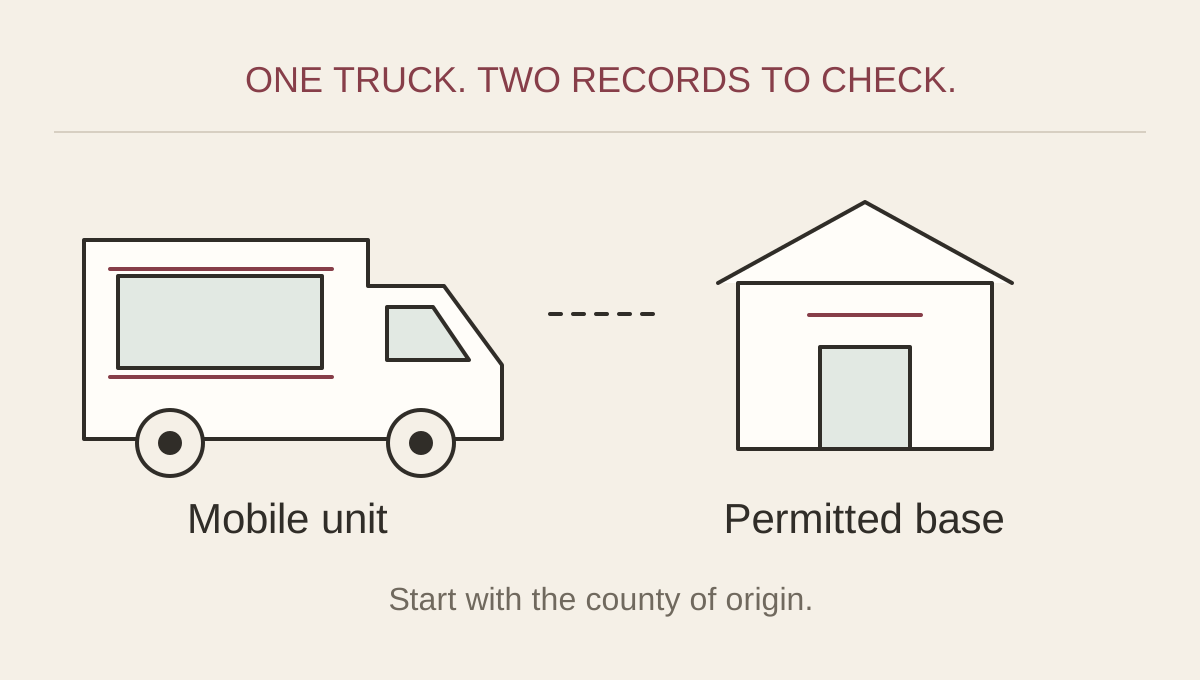
The truck and its base
Georgia defines a mobile food-service establishment as including both its base of operation and its mobile unit or units. The base is a fixed, permitted location. The county of origin is the permitting county where that base is located.
A restaurant’s ordinary food-service permit cannot also serve as the base-of-operation permit for a mobile unit. That distinction matters when a truck has the same brand as a restaurant: matching names do not make the truck’s and restaurant’s records interchangeable.
DPH’s mobile food-service FAQ explains the permits for a base and unit, and authorization to operate in additional counties. A truck can therefore be serving in a different county from its base. Begin with its official identity rather than assuming the lunch-stop address identifies the permitting county.
Find the official record
- Identify the unit. Note its name and any unit or permit number available. If the base or county of origin is unclear, ask the operator or county office.
- Open the official search. Start at Georgia DPH’s food-service page and follow its inspection-search link.
- Search by name. The state portal accepts establishment names and location keywords. Its additional filters include county, permit type and permit number. Select Food Service when narrowing the permit type.
- Compare the identity fields. Check the name, address and permit number on a result. Determine whether the record belongs to the vehicle, base or a separately permitted restaurant.
Start without a score filter so a high or low result cannot disappear just because of your search settings. The portal requires a date range when searching by score. DPH directs readers to a separate search for Gwinnett, Newton and Rockdale; use the current links on its food-service page.
Read the inspection details
Keep the inspection date and purpose beside the score. Read any findings and correction notes, then check for later results for that same unit or base. A familiar brand name is not enough to transfer a score from one permit to another.
Georgia’s rules require the county of origin and additional operating counties to exchange inspection information. When inspecting a unit outside its county of origin, the local authority consults the DPH database for the base’s last inspection violations and notes those violations during the unit’s inspection. This is one reason a mobile report may refer to the base.
Source: Georgia food-service rules, 511-6-1-.10(2)(e).
Follow what the specific report says. Our guide to reading an inspection report explains the purpose, findings and correction markers. A permit or operating authorization and a dated inspection score answer different questions.
If you cannot find the truck
Check your spelling and filters, then confirm the name and county used on the permit. Ask the county environmental health office to help identify the relevant mobile-unit and base records. A missing search result does not establish that a truck is unpermitted or has never been inspected.
Our Fulton County lookup can show matching food-service records we have collected, but it does not cover every food truck operating in Atlanta. We keep official facility identities separate and do not combine records just because names or addresses resemble each other.
If you want to report something you observed, use our guide to reporting a health concern to find the official county channel. Explain where and when the truck was serving as well as the identifying details you have.